
Planning for Retirement Checklist: Essential Steps for Financial Freedom
Planning for retirement can feel overwhelming, but it doesn’t have to be. What if you had a simple checklist to guide you step-by-step?
Imagine knowing exactly what to do next, so you can enjoy your future without worry. This checklist is designed just for you—to help organize your finances, plan your lifestyle, and secure your peace of mind. Keep reading, and you’ll discover how easy it can be to take control of your retirement plans today.
Set Retirement Goals
Setting clear retirement goals is a crucial first step in your retirement planning journey. It guides your decisions and keeps you focused on what truly matters. Knowing your goals helps you prepare financially and emotionally for your future. Let’s explore how to set these goals effectively.
Estimate Retirement Age
Decide the age you want to retire. This helps plan your savings timeline. Some people choose early retirement for more free time. Others prefer working longer for extra income. Think about your health and job satisfaction too. The age you pick will shape your entire plan.
Determine Lifestyle Expectations
Imagine the life you want after retiring. Will you travel often or stay home more? Do you plan to move to a new city or stay where you are? Consider daily expenses like food, housing, and hobbies. Your lifestyle choices affect how much money you need. Clear expectations make your savings goal realistic and achievable.
Assess Current Financial Situation
Assessing your current financial situation is the first step in retirement planning. It gives you a clear picture of where you stand today. This helps you set realistic goals for the future. Understanding your finances prevents surprises later. It also shows areas where you can improve or save more.
Calculate Net Worth
Net worth is the total value of your assets minus debts. Add up the value of your savings, investments, and property. Then subtract what you owe, like loans and credit card debt. This number shows your financial health at a glance. A positive net worth means you have more assets than debts. Track this number regularly to see your progress.
Review Income And Expenses
List all sources of income, such as salary, pensions, or rental income. Next, write down all monthly expenses, including bills, groceries, and entertainment. Compare your income to your expenses to understand your cash flow. Knowing this helps you find ways to save more money. Cutting unnecessary expenses frees up funds for retirement savings.
Create A Savings Plan
Maximize Retirement Contributions
Put as much as you can into retirement accounts. These accounts often offer tax benefits. Use options like 401(k) or IRA plans. Increasing contributions boosts your savings faster. Take full advantage of employer matches if available.Automate Savings
Set up automatic transfers to your savings. This makes saving easy and regular. It reduces the chance of spending what you should save. Automation helps keep your plan steady. Small amounts saved often add up over time.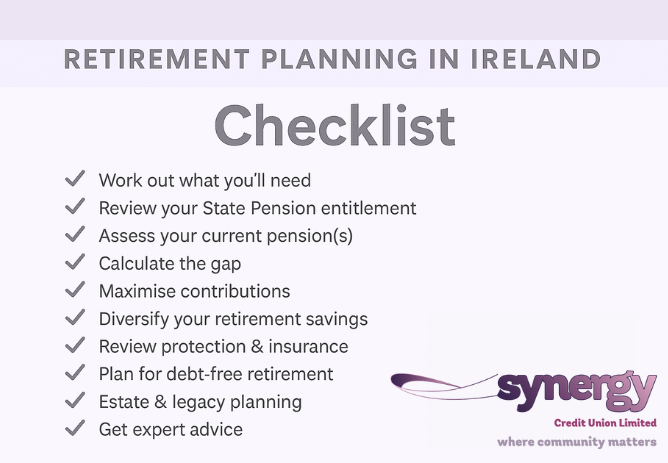
Credit: synergycu.ie
Manage Debt Effectively
Managing debt is a key step in planning for retirement. Debt can reduce the money you have saved. Paying off debt early frees up more funds for your future. A clear plan helps you stay on track and avoid stress.
Prioritize High-interest Debt
Focus on paying off debts with the highest interest rates first. These debts cost you the most money over time. Credit cards and payday loans often have high rates. Paying them down quickly saves you money. It also helps improve your credit score.
Plan Debt Repayment Timeline
Create a timeline to clear your debts before retirement. Set realistic monthly payment goals. Track your progress regularly to stay motivated. Adjust your plan if your income or expenses change. A clear timeline gives you control over your finances.
Invest For Growth
Investing for growth plays a key role in building a secure retirement. Your money should work hard to increase over time. Smart investments help you keep up with inflation and meet future expenses. Planning carefully can make your retirement years more comfortable.
Diversify Investment Portfolio
Diversifying your investments spreads risk across different assets. Stocks, bonds, real estate, and cash are common options. This mix helps protect your money from big losses. If one investment falls, others can balance it out. Diversification creates a more stable growth path.
Balance Risk And Reward
Finding the right balance between risk and reward is essential. Higher risk can mean higher returns but also bigger losses. Lower risk offers safety but slower growth. Adjust your choices based on your age and comfort level. Younger investors might take more risks for growth. Older investors often prefer safer options to protect savings.

Credit: elevatefinancial.ie
Plan For Healthcare Costs
Planning for healthcare costs is a key step in preparing for retirement. Medical expenses can rise as you age. Being ready helps avoid financial stress later. Start by understanding your options and estimating future costs. This ensures you have enough saved to cover your needs.
Explore Insurance Options
Review different health insurance plans carefully. Medicare is a common choice for retirees. Check what it covers and what it doesn’t. Consider supplemental insurance to fill gaps in coverage. Look at prescription drug plans too. Insurance choices affect your out-of-pocket costs a lot.
Estimate Medical Expenses
Calculate your expected medical costs each year. Include doctor visits, medications, and hospital stays. Think about long-term care needs as well. Use past medical bills as a guide. Add a buffer for unexpected health issues. This estimate helps you save the right amount for healthcare.
Understand Social Security Benefits
Understanding Social Security benefits is a key step in planning for retirement. These benefits provide a steady income after you stop working. Knowing how they work helps you make smart decisions. Social Security can cover part of your living costs. Learning the rules early helps you get the most from your benefits.
Determine Eligibility
Check if you qualify for Social Security benefits. You need enough work credits. Usually, 40 credits or about 10 years of work are required. Age also matters. You can start receiving benefits at age 62, but full benefits come later. Different rules apply for spouses and survivors. Verify your eligibility to plan better.
Optimize Benefit Timing
The age you claim benefits affects your monthly payment. Claiming early means smaller checks. Waiting until full retirement age gives you full benefits. Delaying past full age can increase your monthly amount. You can delay up to age 70 for higher payments. Plan your timing to fit your financial needs.
Credit: qedwealthsolutions.kit.com
Prepare Legal Documents
Preparing legal documents is a vital step in retirement planning. These papers protect your wishes and your family. They help avoid confusion and stress during difficult times. Organizing them early keeps everything clear and ready.
Create A Will
A will states how your assets will be divided after you pass away. It names who gets your property, money, and belongings. Without a will, state laws decide who inherits your estate. This can cause delays and disputes. Writing a will ensures your wishes are followed. You can also name a guardian for minor children. Update your will regularly to reflect changes in your life.
Set Up Power Of Attorney
Power of attorney lets someone handle your affairs if you cannot. This person can make financial and legal decisions for you. Choose someone you trust to act in your best interest. There are two main types: financial and medical power of attorney. Financial power of attorney manages money and bills. Medical power of attorney makes healthcare choices. Setting this up early helps avoid problems later. It gives peace of mind knowing your affairs are covered.
Frequently Asked Questions
What Is The First Step In A Retirement Planning Checklist?
Start by assessing your current savings and monthly expenses. Know what you have and need.
How Much Money Should I Save For Retirement?
Aim to save at least 15% of your income each year for a comfortable retirement.
When Should I Start Planning For Retirement?
The earlier, the better. Starting in your 20s or 30s gives your money time to grow.
What Expenses Should I Include In Retirement Planning?
Include housing, healthcare, food, travel, and unexpected costs in your budget for retirement.
How Can I Adjust My Retirement Plan If Needed?
Review your plan yearly. Adjust savings, spending, and investments based on life changes and goals.
Conclusion
Planning for retirement takes careful steps and smart choices. Start early to build a strong savings habit. Track your expenses and set clear goals. Regularly check your investments and adjust as needed. Don’t forget to plan for health care and emergencies.
A solid checklist helps you stay on track and feel confident. Small actions today bring peace tomorrow. Retirement can be a time of comfort and joy with good preparation. Keep your plan simple, and review it often. Your future self will thank you.